

A construction company can have a full schedule, a busy crew, and plenty of money moving through the bank account and still have no clear answer to one basic question: Which jobs are actually making money?
That is where good construction bookkeeping becomes more than recordkeeping. The goal is not simply to keep QuickBooks clean or hand a set of reports to a tax preparer at year-end. The goal is to build a financial system that helps a contractor make better decisions while there is still time to change the outcome.
When the books are set up correctly, they should help answer questions like:
- Did this job actually make the margin we expected?
- Are labor costs eating up more of the contract than we planned?
- Should we rent a piece of equipment for the next project or buy it?
- Can we afford to add another employee?
- Would a subcontractor make more sense for this type of work?
- How much cash do we need before the next payroll and material order hit?
- Which types of jobs are worth pursuing again, and which ones keep creating problems?
Those are management questions, not just accounting questions. Your bookkeeping should give you the information to answer them.
1. Track Every Job Separately
If all project income and expenses are mixed together, the profit and loss statement may tell you whether the company made money overall, but it cannot tell you which jobs produced that profit.
For each meaningful project, you should be able to see the income and direct costs connected to that job, including:
- Materials
- Direct labor
- Subcontractors
- Equipment rental
- Permits and project-specific fees
- Delivery and freight
- Dump fees
- Travel or lodging when applicable
- Change-order revenue and related costs
- Other job-specific expenses
That lets you compare what you expected to spend with what actually happened. QuickBooks Online Projects can group income and costs by project so you can monitor profitability instead of waiting until year-end to discover that several jobs did not perform the way you thought they did.
2. Know Your True Labor Cost
A worker who earns $25 per hour does not cost the business only $25 per hour.
For W-2 employees, the real labor cost can include:
- Gross wages
- Employer payroll taxes
- Workers compensation
- Paid time off
- Bonuses
- Benefits
- Payroll processing costs
- Training time
- Non-billable travel or shop time
- Supervision and administrative time
If labor is priced into an estimate using only the employee hourly wage, the job can look more profitable on paper than it really is. The same principle applies when comparing employees with subcontractors. Classification should follow tax and labor rules, but once the classification is appropriate, the books should help you understand the financial impact of each staffing model.
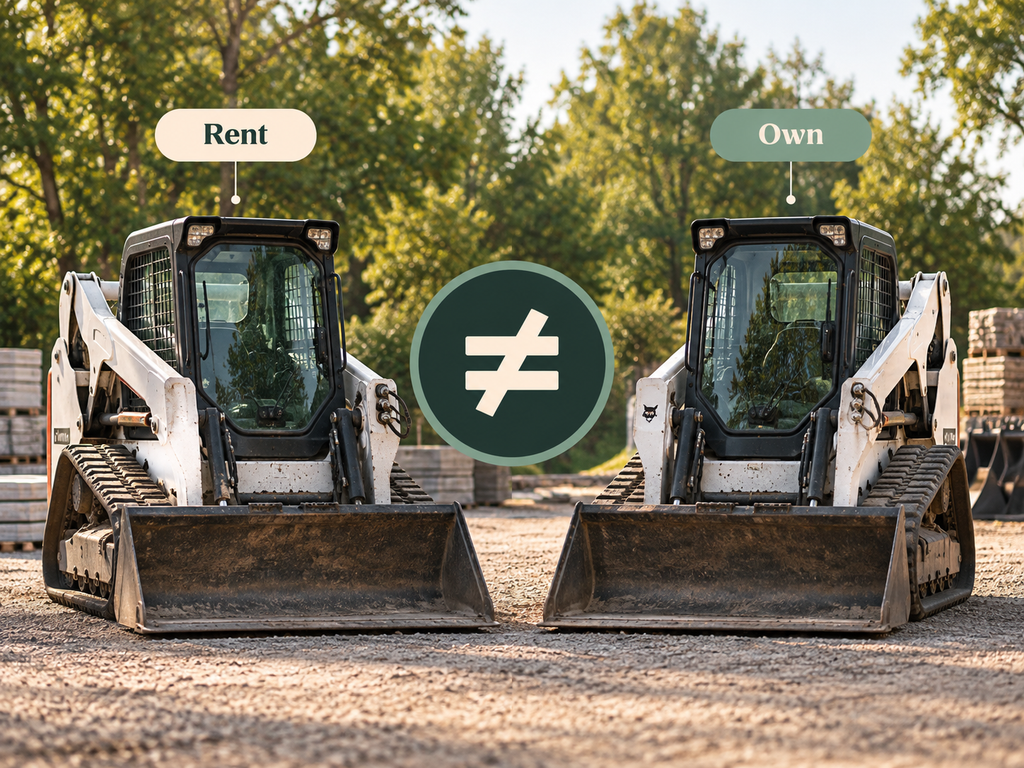
3. Renting Equipment vs. Owning It
Equipment decisions are another area where intuition can get expensive quickly.
Buying may feel cheaper because you stop paying rental invoices, but ownership creates costs that can be easy to overlook:
- Purchase price or loan payments
- Interest
- Repairs and maintenance
- Insurance
- Registration and licensing
- Storage
- Transportation
- Downtime
- Replacement parts
- Depreciation and eventual replacement
Renting has its own tradeoffs: higher short-term usage cost, delivery or pickup charges, availability constraints, and no long-term asset value, but it can also provide flexibility and reduce maintenance responsibility. Good bookkeeping gives you the historical information to compare those choices using actual cost and usage patterns instead of guessing.
4. Separate Job Costs From Overhead
Not every business expense belongs to a specific project. Direct job costs belong to the work itself. Overhead supports the company as a whole.
Common construction overhead can include:
- General liability insurance
- Office payroll
- Bookkeeping and accounting
- Software subscriptions
- Shop rent
- Cell phones
- Vehicles used across multiple jobs
- Marketing
- Licenses
- General tools and supplies
- Administrative expenses
If overhead is ignored when pricing work, a project can appear profitable even though it is not contributing enough to support the rest of the business.
5. Track Change Orders Before They Disappear Into the Job
Change orders are one of the easiest places for profit to leak out of a construction project. A customer asks for additional work. The crew handles it. Materials are ordered. Extra labor goes onto the job. Then the paperwork catches up later, or sometimes never does.
A strong workflow should make it easy to identify:
- What changed
- What additional materials were required
- How much additional labor was used
- Whether the customer approved the change
- Whether the change was invoiced
- Whether payment was collected
If the additional work is not tracked in both the operational system and the accounting system, the job-cost report may show declining profitability without making the reason obvious.
6. Use the Right Software for the Right Job
QuickBooks should be the accounting system, but it does not necessarily need to run every part of the field operation. Platforms such as Jobber and Housecall Pro can help manage estimates, scheduling, dispatching, customer communication, work orders, and invoicing.
Before adding another app, decide:
- Which system will create the customer and job?
- Where estimates will be prepared
- Where invoices will originate
- How payments will sync
- How labor and job details will reach QuickBooks
- Whether deposits, fees, or payment processing will create duplicate transactions
- Who is responsible for checking that the integration is working correctly
A good technology stack should reduce duplicate work and improve visibility. If the same information has to be entered three times, something in the process probably needs attention.
7. Watch Cash Flow, Not Just Profit
A profitable job can still create a cash-flow problem. Construction businesses often pay for labor, materials, fuel, equipment, and subcontractors before all of the customer money has been collected.
At a minimum, the owner should have visibility into:
- Current cash available
- Upcoming payroll
- Large material purchases
- Vendor bills due
- Credit-card balances
- Outstanding customer invoices
- Deposits received for future work
- Progress billings
- Retainage, when applicable
- Tax obligations
This is why a bank balance alone is not enough. A large checking-account balance can look comfortable until you realize most of it already has a job.
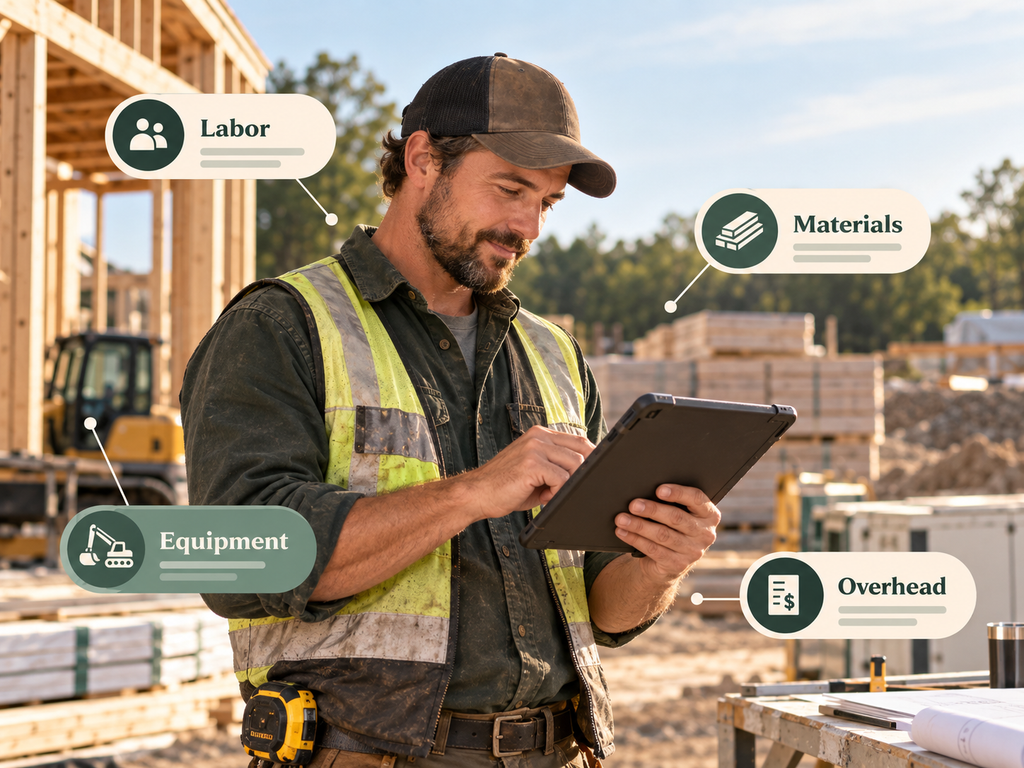
8. Review the Numbers That Actually Help You Decide
Construction companies can produce a mountain of reports. More reports are not automatically more useful.
For many contractors, the most useful information includes:
- Estimated vs. actual cost by job
- Gross profit by job
- Labor cost as a percentage of revenue
- Material cost by job
- Subcontractor cost by job
- Accounts receivable and aging
- Upcoming accounts payable
- Cash required for payroll and major purchases
- Profitability by job type, customer type, or service line
- Trends in overhead and operating expenses
The point is to create a short set of critical numbers that helps the owner make decisions without having to decode the accounting system.
9. Tax Planning Still Matters, But It Should Not Be the Only Goal
Construction bookkeeping absolutely matters at tax time. Clean records help identify deductible expenses, support asset records, and make tax preparation far less painful.
But if the books only become useful once a year, the business is leaving most of their value on the table. The bigger opportunity is using those same records throughout the year to decide:
- Which jobs to pursue
- How to price future work
- When to hire
- Whether to buy equipment
- How much cash to reserve
- Where costs are creeping upward
- Which parts of the business are producing the strongest return
Internal link note: link a natural phrase such as construction tax deductions here to the existing construction tax-deductions article.
Good Construction Bookkeeping Should Reduce the Guesswork
The point of construction bookkeeping is not to create more paperwork for the owner. It is to reduce the number of decisions that have to be made from instinct alone.
You should be able to look at the numbers and understand where the business stands, which jobs are carrying their weight, what cash is already committed, and what the company can reasonably do next.
If your books tell you what you spent but not which jobs are actually making money, the system needs more than cleanup.
Serenity Solutions provides construction-focused bookkeeping and financial systems support for contractors who want accurate books, stronger job-cost visibility, and less financial uncertainty.